A Comparative Analysis of Regulatory Depth vs. Digital Delivery in 2026
Executive Summary
The rapid evolution of asynchronous digital learning has fundamentally transformed how the aviation industry maintains regulatory compliance. However, as the market floods with e-learning alternatives for mandatory training – such as EASA Part-145 Safety Management Systems (SMS) and Human Factors (HF) – aviation quality managers and corporate procurement teams face a growing dilemma.
This white paper examines five prominent training providers evaluated across twelve critical dimensions spanning internal instructional design, User Experience (UX), Learning Management System (LMS) architecture, and market-facing client support.
The findings reveal a significant fragmentation in the market: a distinct polarization between platforms offering visual polish with superficial content versus those offering profound regulatory depth with traditional delivery mechanics.
The 2026 Aviation E-Learning Evaluation Matrix
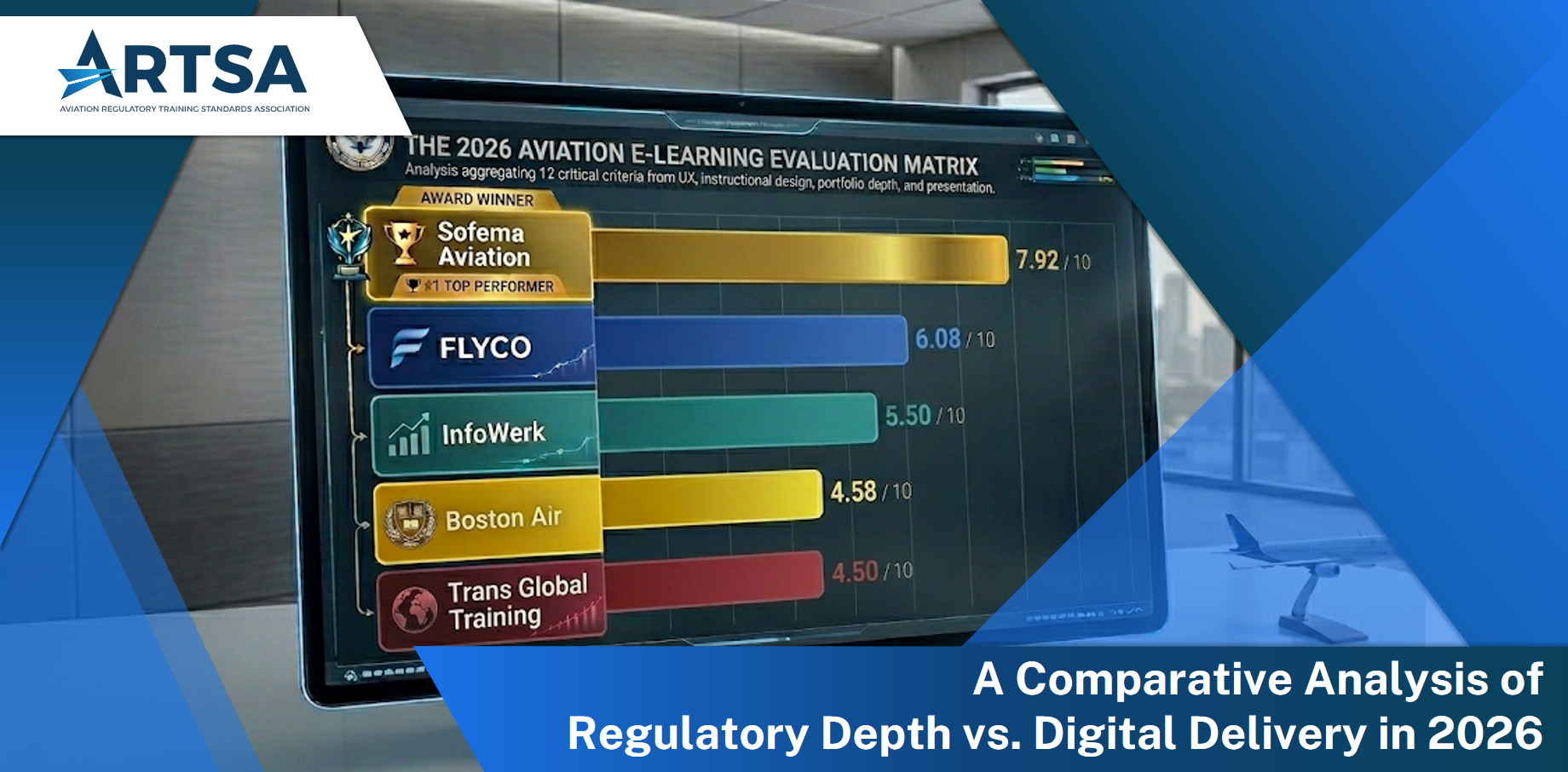
To establish an objective benchmark, providers were evaluated out of a maximum score of 10. This comprehensive positioning index aggregates nine in-course UX and instructional elements alongside three market-facing parameters (catalog depth, customer validation transparency, and enterprise scalability).
Aviation Training Market Positioning Overview
1. Sofema Aviation
Comprehensive Score: 6.92/10
Market Archetype: Market Leader
Core Strategic Focus: Regulatory Mastery & Career Pathways
2. FLYCO
Comprehensive Score: 6.08/10
Market Archetype: Tech-Centric Contender
Core Strategic Focus: Cloud-Native Mobile Micro-Learning
3. InfoWerk
Comprehensive Score: 5.50/10
Market Archetype: B2B Infrastructure Specialist
Core Strategic Focus: Corporate LMS & Integrated AV Ecosystems
4. Trans Global Training
Comprehensive Score: 5.50/10
Market Archetype: Low-Cost Disruptor
Core Strategic Focus: Transactional, High-Speed Compliance
5. Boston Air
Comprehensive Score: 4.58/10
Market Archetype: Traditional Practitioner
Core Strategic Focus: Institutional Part-147 Credibility
Decoding the Market Archetypes
1. The Mastery Model: Deep Portfolio & Structured Growth
Providers occupying this space, led by Sofema Aviation, treat training not as a singular administrative checkbox, but as an ongoing engine for organizational competence.
- The Strength: An extensive, multidisciplinary catalog (often exceeding 400 courses) allows organizations to map out long-term, role-specific vocational tracks and structured diplomas. Compliance is backed by explicit regulatory guarantees and extensive, transparent peer review.
- The Vulnerability: The sheer volume and deep technical density of the material can sometimes outpace the aesthetic UX design, occasionally leading to lower scores in real-time interactivity.
2. The Cloud-Native App Model: High Interaction, Targeted Scope
Platforms like FLYCO prioritize user engagement through modern UI mechanics, synchronized step-by-step text reveals, and polished multimedia elements.
- The Strength: Exceptional instructional clarity for single-subject courses. Visual assets and piece-by-piece animations match the pacing of natural audio narration, simplifying highly complex foundational concepts.
- The Vulnerability: These platforms are traditionally optimized for flight operations and cabin crews rather than specialized maintenance engineering or quality assurance. Technical dashboard bugs, such as post-certification tracking errors, can compromise enterprise administration.
The “Beyond Compliance” Philosophy: True operational safety requires moving past “box-ticking” exercises. A beautiful interface that lacks regulatory rigor introduces hidden liabilities. Conversely, unengaging delivery risks losing learner focus, undermining the safety culture an organization aims to build.
3. The Low-Cost/Speed Model: Transactional Compliance
Represented by entrants like Trans Global Training, this model strips away all aesthetic and technological overhead to deliver a raw, rapid, and low-cost compliance mechanism.
- The Strength: Highly attractive for price-sensitive operations or urgent, foreign-authority Aircraft on Ground (AOG) requirements. Testing is streamlined, and corporate validation highlights swift, field-level turnaround times.
- The Vulnerability: Primitive software design, absence of audio narration, and basic assessment methods (such as answers being visible by simply scrolling the screen layout) drastically reduce actual knowledge retention.
4. The Traditional Infrastructure Models: Moodle and Part-147 Legacies
Providers like InfoWerk and Boston Air leverage existing organizational pillars – either robust Moodle/AV technology deployment or prestigious Part-147 classroom training reputations.
- The Strength: Predictable, stable onboarding environments and powerful B2B credibility that appeals directly to traditional airline procurement boards.
- The Vulnerability: A stark disconnect frequently exists between their modern public web presence and an outdated, rigid, or small-window internal course player interface that lacks mobile responsiveness or advanced user speed controls.
Industry Recommendations for Training Procurement
To bridge the gap between regulatory compliance and modern digital standards, the Aviation Regulatory Training Standards Association recommends that corporate aviation buyers evaluate future e-learning partnerships against three key pillars:
- Insist on Active Learning Environments: Reject passive page-turning software. Providers must incorporate active learning checkpoints, click-to-reveal sub-structures, and situational branch choices to convert passive viewing into true competence tracking.
- Prioritize Inclusive LMS Technology: Modern platforms must serve an international workforce. High-scoring e-learning solutions should feature advanced playback controls, including variable audio speed adjustments (1.25×,1.5×) and automated, accurate closed-captioning for non-native English speakers.
- Demand Content Currency and Document Control: Ensure clear version control and formal revision histories are visible inside the digital learning documents. The presence of modern concepts like Just Culture and active reporting systems must be explicitly verified to guarantee alignment with current EASA frameworks.
Conclusion
The ideal aviation e-learning environment requires a deliberate fusion of deep regulatory expertise and modern, active software design. While specialized tech vendors offer sleek interfaces, the ultimate benchmark remains technical accuracy and portfolio depth. The industry’s path forward lies in enhancing established, high-density regulatory ecosystems with advanced interactive tools, ensuring training truly goes beyond basic compliance to build a resilient safety culture.